
The Culture of Haiti is a creolized blend of African, European and Indigenous elements due to the French colonization of Amerindian land (which was then renamed Saint-Domingue), in conjunction with the large diverse enslaved African population who had later freed themselves by a successful revolt. These attributions have largely influenced the art, cuisine, literature, music, religion as well as the languages of Haiti.
Two languages are spoken in Haiti. French is taught in schools and known by about 42% of the population,[1] but spoken by a minority of black and biracial residents, in Port-au-Prince and other cities. Haitian Creole, with roots in French, Spanish, Taíno, Portuguese, English, and African languages, is a language with dialectal forms in different regions. It is spoken throughout the country, but is used extensively in rural areas.[2]

Hommage au journasliste, animateur, Pasteur Claude Louissaint
Talenteux musicien, band leader Mahalaléel
Pasteur Claude Louissaint, comme journaliste il a été un animateur vedette a radio lumiere.
Brilliant colors, naïve perspective, and sly humor characterize Haitian art. Big, delectable foods and lush landscapes are favorite subjects in this land. Going to market is the most social activity of country life, and figures prominently into the subject matter. Jungle animals, rituals, dances, and gods evoke the African past.
Artists paint in fable as well. People are disguised as animals and animals are transformed into people. Symbols take on great meaning. For example, a rooster often represents Aristide and the red and blue colors of the flag of Haiti, often represent his Lavalas party.
Many artists cluster in ‘school’ of painting, such as the Cap-Haïtien school, which features depictions of daily life in the city, the Jacmel School, which reflects the steep mountains and bays of that coastal town, or the Saint-Soleil School, which is characterized by abstracted human forms, and is heavily influenced by Vodou symbolism.
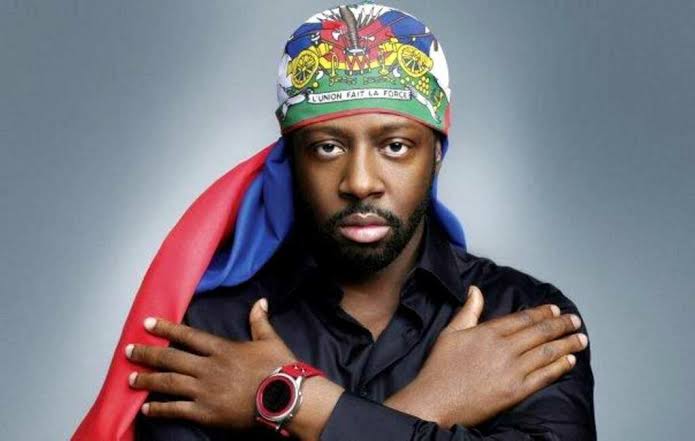
Nelust Wyclef Jean[2] (/ˈwaɪklɛf ˈʒɒn/ WY-klef ZHON; born October 17, 1969)[2][3] is a Haitian rapper, singer, songwriter, and record producer. Born in Haiti, Jean emigrated to the United States as a child.[4] He gained fame as a member of the Fugees, a hip-hop trio he formed with Lauryn Hill and Pras, serving as the group’s lead producer and guitarist. Their second album The Score (1996) became one of the best-selling albums of all time. Jean launched a solo career with Wyclef Jean Presents The Carnival (1997), which spawned the hit singles “We Trying to Stay Alive” and “Gone till November“.